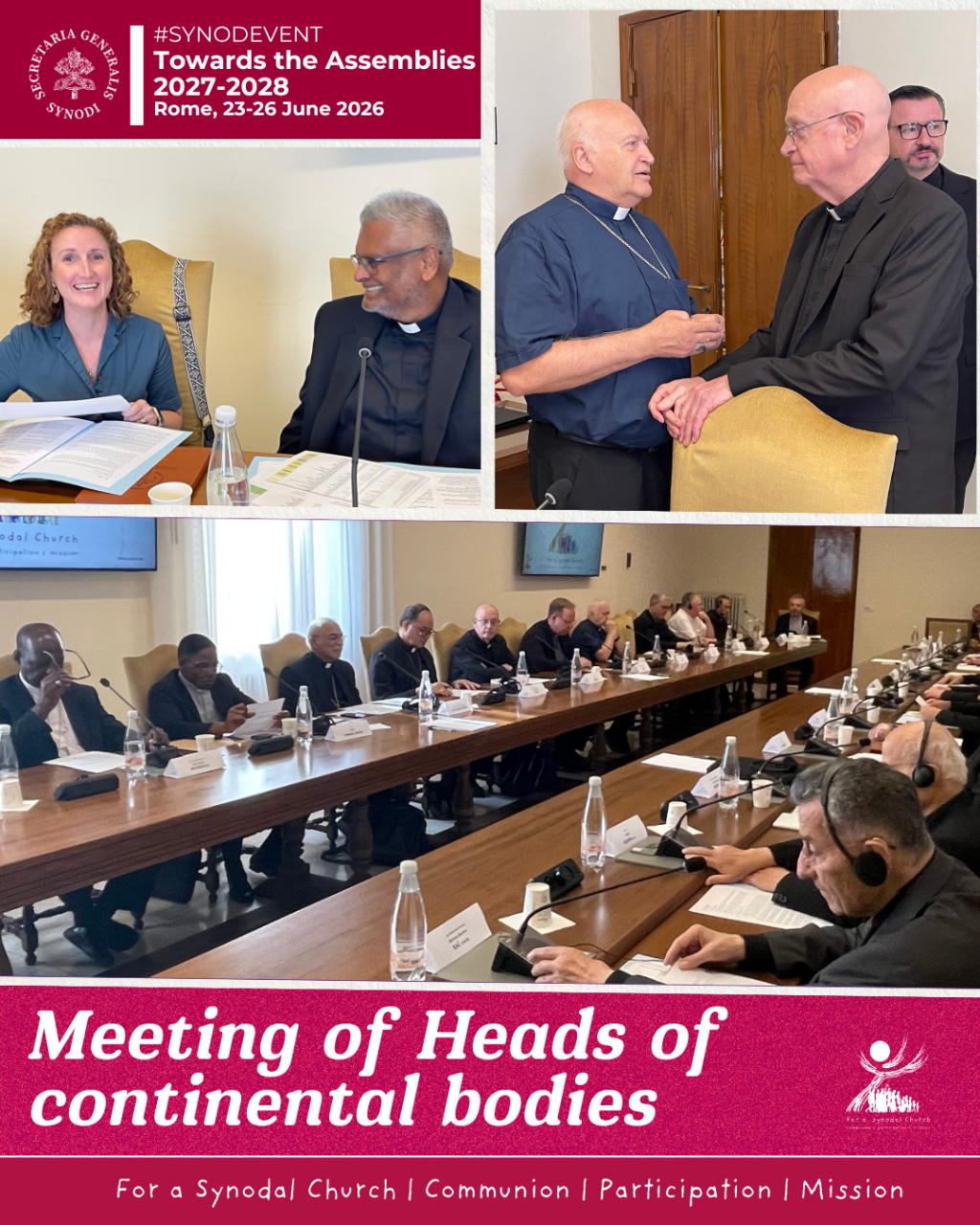
Meeting of the heads of the continental bodies of the Catholic Church begins
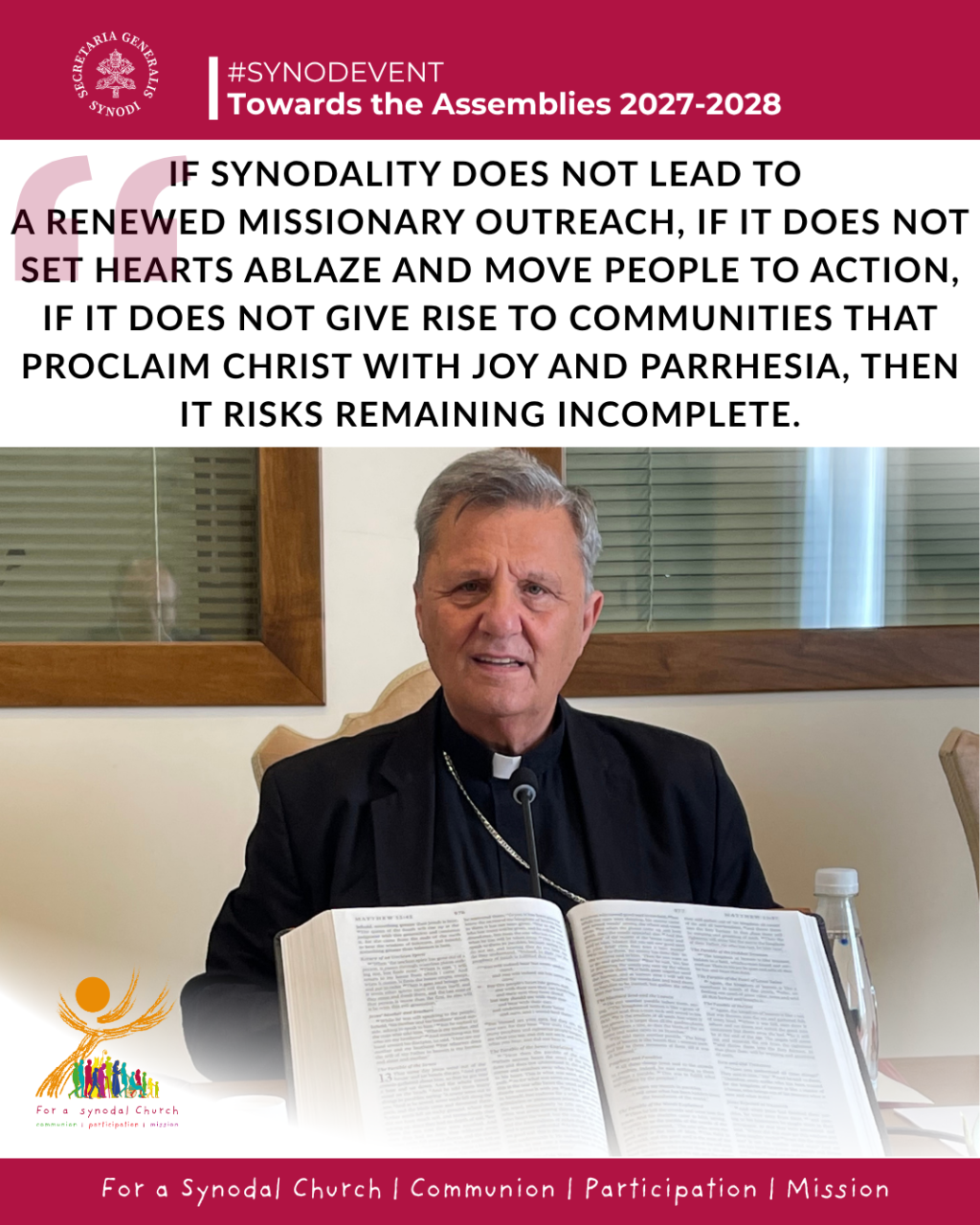
Opening the proceedings in the late afternoon of Tuesday, 23 June, Cardinal Mario Grech, Secretary General of the General Secretariat of the Synod, began with a brief assessment of the journey undertaken thus far, recalling the uniqueness of the current process: “never before has a synodal process generated such momentum, such gravitas”. Indeed, numerous initiatives have been undertaken by local Churches (including schools of synodality established to support formation, symposia, conferences, and processes of listening and discernment) in order to engage the faithful. Nevertheless, the Cardinal observed: “I will be truly satisfied only when I see the emergence of a broad missionary movement, a renewed impulse that leads the Church to go forth, to take risks, to draw near to others, and to bear witness to the Gospel with freedom and creativity. For, as has been repeated many times, the ultimate purpose of this synodal conversion is not merely to improve internal processes or to make our structures more participatory.” Rather, it is a matter of proclaiming the person of Jesus Christ, as recalled in the Final Document (14) of the XVI Ordinary General Assembly of the Synod of Bishops. For Cardinal Grech, “if synodality does not lead to a renewed missionary outreach, if it does not set hearts ablaze and move people to action, if it does not give rise to communities that proclaim Christ with joy and parrhesia, then it risks remaining incomplete.”
The Secretary General of the Synod went on to note that this mission is closely connected to the transition the Church has been undergoing since the Second Vatican Council, which proposed a model of Church that values the diverse social and cultural contexts in which local Churches live and carry out their mission. “These varieties – whether theological, liturgical, pastoral, or disciplinary – are not a threat to unity but one of its vital conditions. They prevent ecclesial life from being reduced to a single form, a single sensibility, or a single cultural model. Synodality, in this sense, is not merely an organizational method. It is the path through which the Church learns to recognize, welcome, and integrate plurality as a gift of the Spirit”.
Supporting this vision is the image of a polyhedral Church, a perspective proposed not only by Pope Francis (EG, 236), but also by Pope Leo XIV in his recent Encyclical Magnifica Humanitas (MH 25).
For the Secretary General of the Synod, “the image of the polyhedron, embraced by both Pontiffs, thus becomes a genuine ecclesiological icon: the one truth of the Gospel is reflected from many angles, without losing its unity, while being enriched by the diversity of cultures, experiences, and charisms. Applied to synodality, this logic becomes especially eloquent. The synodal journey is not aimed at occupying institutional spaces or redefining balances of power, but at generating dynamics of listening, discernment, and co-responsibility that, over time, transform the Church from within. It is a process that does not fear diversity but welcomes it as a place where the truth of the Gospel can resonate in new and unexpected ways.”
Cardinal Grech concluded his address by also recalling the ecumenical dimension of the synodal process.
The meeting continues today with plenary sessions and working groups, including a time of sharing among participants on the principal developments in the implementation of the Final Document (significant experiences, challenges encountered, and pastoral priorities) as well as on the role of the continental bodies in accompanying local Churches and groupings of Churches, with particular attention also being given to the role of communication.
On the afternoon of Thursday, 25 June, Pope Leo XIV will meet the participants and engage in dialogue with them at the General Secretariat of the Synod.
The opening address of Cardinal Grech is available in Italian and English.